Review: A Seal of Salvage, by Clayton B. Smith
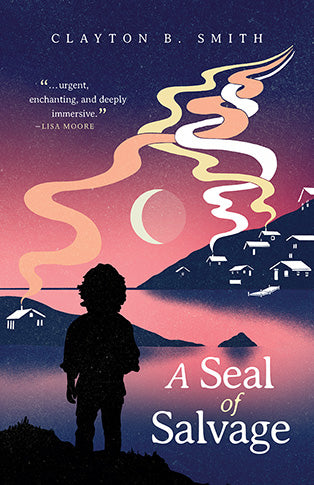 A Seal of Salvage
Clayton B. Smith
176 pages
Release: March 26, 2024
ISBN 9781778530104
Publisher: Breakwater Books
Clayton B. Smith’s name first came to me during my time as a juror for the 2025 Sunburst Award. A Seal of Salvage is his debut novel went on to be shortlisted for the award.
Smith lives in St. John’s, but is originally from outport Newfoundland. He holds a joint honours degree in English and philosophy, and a diploma in creative writing from Memorial University. His work has appeared various literary magazines.
But first, the marketing blurb:
Set in 1950s rural outport Newfoundland and blending historical fiction with magic realism, A Seal of Salvage follows orphan Oliver Brown’s coming of age as a queer outsider. Oliver’s life in the small community of Salvage is overshadowed by lingering rumours about his mother, her mysterious past, and her untimely death.
But as Oliver grows up, he experiences a remarkable series of events of mythic proportions. Stories of Oliver’s mother become entangled with the folklore of the Selkie: people of the sea who live in the water as seals and come to land to find love as humans. While mostly unspoken, the speculations about Oliver’s bloodline become another excuse the town uses to marginalize him.
A Seal of Salvage is one of those rare literary works which transcends genre to become something other than mere categorization. This is writing which belongs in the canon of Canadian literature alongside other celebrated works by Atwood, King, Boyden, Wagamese, Crummy, and others. This is writing which sits easily astride good entertainment and profound, classical literature.
Clayton chooses to tell the tale of adolescent Oliver partly through an unreliable narrator, much in way the story of The Legend of Bagger Vance unfolds, or King’s Rita Hayworth and Shawshank Redemption, and partly through Oliver’s own voice. That’s not an easy narrative to pull off, but Clayton handles it with great panache.
The environmental and historical descriptions are poignant and realistic, very closely woven through Oliver’s perspective so that mood and presence are created with an intimate and knowledgeable hand. Because of that, every slight, every marginalization Oliver experiences is very much reflected in the description of landscape, much in the way Thomas Hardy chose to create mood and character through environment.
How Clayton then proceeds to marry legend to village ignorance and indigence is not only classic, but brilliant, so that the fact his mother, a legendary beauty, was from away then casts her character and lineage into question, so that to the villagers she could not be other than a selkie. Then later, when Oliver’s homosexuality is revealed in a shattering scene, the village’s, let alone his aunt and uncle’s, judgements further isolate him and bind him securely to the untrustworthy otherness of selkie mythology. And yet, throughout, Oliver’s essential nature remains one of love and acceptance, a kind, even heroic individual.
This is a worthy and timely novel, beautifully written, tenderly told, an investment in every moment of your time, perhaps even tears.
Very highly recommended.